
General Astronautics

General Astronautics

The Space Robotics Company

Winter 2026ActiveIndustrialsManufacturing and RoboticsRoboticsSpace ExplorationAerospaceSan Francisco, CA, USA
Robots for microgravity research and manufacturing.

Verdict

Medium Signal
Market Opportunity
In-space manufacturing is a real and emerging market — pharmaceuticals, semiconductors, and advanced materials in microgravity are genuine use cases with growing commercial space station investment (Axiom, Starlab, Vast). However, the market is nascent, capital-intensive, and dependent on launch infrastructure scaling. TAM is potentially large but the addressable portion in the near term is small and government/contract-driven.
Medium Signal
Founder Signal
Bram Schork: Caltech MechE (elite school), SpaceX Starlink Lasers intern (designed robotic testing assembly for optics validation — directly domain-relevant), soft robotics publications and patent co-inventor since high school, Cosmic Robotics intern. Shibo Zhou: CMU CS with Robotics concentration (elite + perfectly aligned), USACO Finalist (top 25 in USA, invited to IOI training camp — exceptional CS signal), AWS/AppLovin/rabbit internships. Complementary co-founders with strong pedigree. The real limitation: both graduated Dec 2025 and have zero professional experience beyond internships — no prior company building, no exits, and space robotics hardware is brutally capital-intensive for first-time founders.
Low Signal
Competition
Space robotics and in-space manufacturing has real funded competitors: Gitai (space robotics, JAXA/NASA contracts), Motiv Space Systems (JPL heritage), Redwire (established space manufacturing, publicly traded), and critically Varda Space (in-space pharmaceutical manufacturing, already flew missions). General Astronautics is attacking the robotics automation layer rather than manufacturing directly, but their target customers (commercial space stations doing pharma/semiconductor manufacturing) will be courted by all of these players. No proprietary hardware, no contracts, and no differentiation articulated beyond the landing page.
Low Signal
Product
Website is essentially a landing page with just a tagline, YC W26 badge, and NVIDIA Inception logo. No product demo, no specs, no pricing, no customer logos, no described features. Pure vaporware presentation at this stage.
OverallC Tier

General Astronautics has two genuinely talented founders — Bram Schork (Caltech MechE, SpaceX Starlink Lasers, robotics publications since high school) and Shibo Zhou (CMU CS/Robotics, USACO Finalist top 25 USA) are a complementary pair with strong academic pedigree. But both graduated December 2025 and this is a first company for both of them in a capital-intensive sector where Gitai, Redwire, and Varda Space have years of head start and real flight hardware. The product is invisible: no GitHub, no demos, no hardware shown, no customers, no press coverage, and a one-page landing page. The market thesis (robots solving the $130K/hr astronaut labor bottleneck) is intellectually coherent, but it needs $50M+ in capital and years of hardware development before revenue. Strong team for their age, wrong stage for this market.

Active Founders
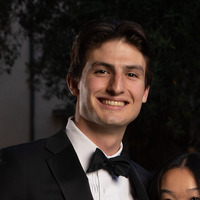
Bram Schork
Bram Schork
Co-Founder & CEO

Bram is a Caltech mechanical engineer who founded General Astronautics after building hardware reliability systems for SpaceX's Starlink Lasers, shipping industrial autonomous robots, and developing optical tracking systems at SBIR-funded startups. Microgravity unlocks better pharmaceuticals, semiconductors, and advanced materials. The bottleneck is labor, not science, and robots can solve that now.

Shibo Zhou
Shibo Zhou
Founder

Cofounder & CTO @ General Astronautics (W26) CS & Robotics @ CMU

General Astronautics
TierC Tier
BatchWinter 2026
Team Size2
StatusActive
LocationSan Francisco, CA, USA
Last Updated3 days ago